

Fire performance at conferences: safety, impact, and tips


TL;DR:
Fire performances can be safely integrated into conferences with proper permits, standards compliance, and safety frameworks.
Understanding NFPA standards and proactive operational planning ensure memorable, hazard-free fire acts that enhance event impact.
Most event coordinators assume fire performance is simply too dangerous for a professional conference setting. That assumption is understandable, but it is also wrong. With the right performers, the right permits, and the right safety framework in place, fire acts are completely achievable at corporate events. In fact, they can become the single most talked-about moment of your entire program. This guide walks you through everything you need to know, from regulatory standards to talent selection, so you can make a confident, well-informed decision for your next event.
Table of Contents
Key Takeaways
Point | Details |
NFPA standards matter | Fire performances for conferences are governed by NFPA 1126 and NFPA 701, not just venue rules. |
Safety is operational | Effective shows require trained staff, emergency plans, and physical controls—not generic security. |
Integration enhances impact | Plan how fire acts fit into your conference agenda and brand messaging for maximum effect. |
Consult experts for best results | Working with specialized consultants and performers ensures compliance and unforgettable entertainment. |
Why fire performance is the ultimate conference wow-factor
Corporate conferences compete hard for attendee attention. Keynote speakers, breakout sessions, and networking mixers are all expected. Fire performance is not. That element of surprise is exactly what makes it so powerful.
Fire transforms themed events into fully immersive experiences. The visual impact is immediate. Spinning props, flowing flames, and synchronized choreography pull every eye in the room. Attendees stop scrolling their phones. They lean in. That kind of instinctive, full-room engagement is extremely rare at a professional event, and it is incredibly valuable for your brand.
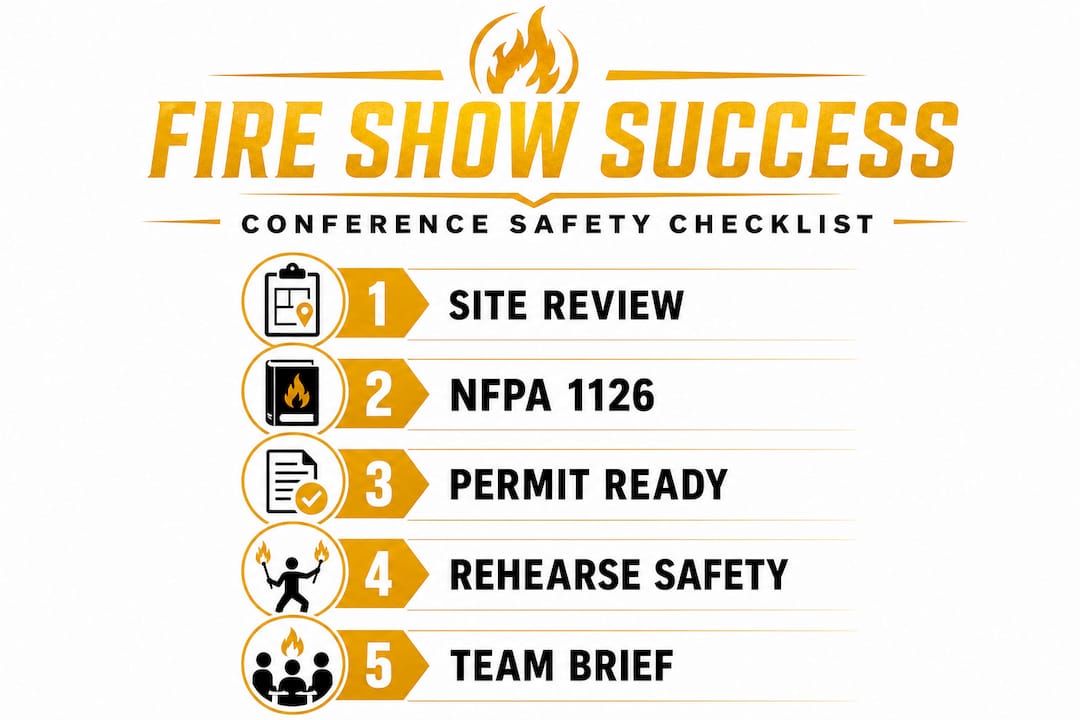
Beyond the spectacle, fire performance creates a shared experience. Attendees talk about it during breaks, reference it in post-event surveys, and mention it to colleagues who were not there. That word-of-mouth value is something no slide deck or branded cocktail napkin can replicate.
Here are the key reasons fire performance stands out as a conference entertainment option:
It generates instant, full-room attention that other acts cannot match
It works as an opening act, intermission feature, or closing statement
It reinforces bold, innovative brand identities
It gives attendees a concrete memory to associate with your event
It photographs and videos exceptionally well for post-event marketing
“Spectacle meets safety, if you build the right framework.”
It is worth addressing the myths directly. Many planners worry that fire performance is inherently dangerous, impossible to insure, or banned outright at indoor venues. None of those things are universally true. When the effect category involves open-flame performance before a proximate audience, NFPA 1126 is the relevant national standard framing the safe use requirements for such events. Working within that standard makes fire performance a manageable, professionally executable entertainment choice.
For planners who are curious about the art form itself, exploring fire dancing basics is a great starting point. Understanding what performers actually do helps you ask better questions and make smarter decisions during the booking process.
With the value established, let’s break down exactly what’s required for safe execution.
Understanding fire safety standards for conferences
The regulatory landscape for fire performance at events is specific. Knowing the key standards before you book anything protects you, your venue, your guests, and your performers.
NFPA 1126 is the primary standard. It covers safe use requirements for pyrotechnic special effects before a proximate audience, including criteria for manufacturers, performers, and event organizers. It also addresses transport, storage, and permitting in performing arts and live event contexts. Every fire act at a conference must be evaluated against this standard.
NFPA 701 addresses a different but equally important risk. Flame propagation from vertically hung textiles, drapery, and backdrops is a real hazard when open flame is present near staging materials. Any fabric used in or around your event space, from drape backdrops to decorative banners, must meet NFPA 701 flame-propagation test methods. Many venues assume their materials are compliant without actually verifying it. That assumption can create serious liability.
Standard | What it covers | Why it matters for conferences |
NFPA 1126 | Open-flame effects before audiences | Defines performer, organizer, and venue requirements |
NFPA 701 | Flammability of textiles and staging materials | Protects against backdrop and drape fire risk |
Local fire code | Permitting, venue-specific rules | Required for legal operation in most jurisdictions |
Insurance requirements | Liability coverage for performers and events | Essential for venue approval and client protection |
Pro Tip: Always request physical test certification documents for any staging material, not just a verbal assurance from a vendor. If the fabric has not been independently tested to NFPA 701 flammability guidelines, do not allow it near the performance zone.
Getting permits in place is a step-by-step process that cannot be rushed:
Identify the specific fire act type (open flame, prop-based spinning, pyrotechnic effects)
Determine which NFPA standards apply based on act type and venue category
Contact your local authority having jurisdiction (AHJ) to confirm permit requirements
Submit permit applications well in advance, typically at least 30 days before the event
Coordinate with your venue’s facility manager to confirm compliance with venue-specific fire codes
Ensure all performers carry proof of certification and insurance before they arrive on site
Completing a thorough site inspection before finalizing any of these decisions is essential. The physical space tells you things that a floor plan simply cannot. Understanding the venue’s ventilation capacity, ceiling height, sprinkler system sensitivity, and proximity of staging materials to performance zones will shape every safety decision you make.
The fire dancing props your performers use also affect compliance. Different props create different flame characteristics, reach, and fuel requirements. A fire fan performance has a different safety profile than a poi routine or a staff act. Knowing what your performers plan to use lets you assess risk accurately.
Knowing the regulatory landscape sets the stage for operational execution.
Operational safety: Building a fire-safe show
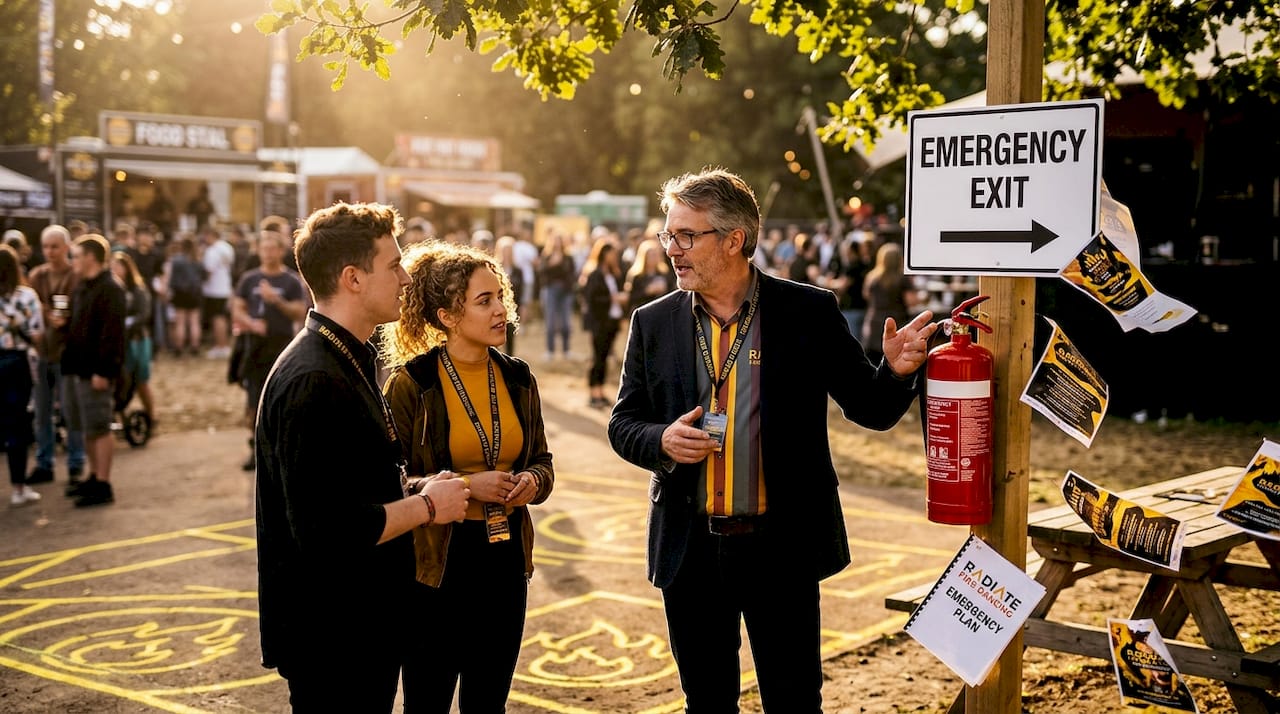
Compliance documents and permits are necessary, but they are not sufficient on their own. The actual execution of a fire performance requires a specific operational safety workflow that is built around trained human beings making real-time decisions.
Safety control | Professional fire show | DIY or unvetted act |
Trained safety spotters | Always present, briefed, and positioned | Absent or informal |
Audience buffer zones | Measured and enforced | Guessed or ignored |
Fuel storage protocol | Sealed, labeled, positioned away from staging | Improvised |
Extinguishment equipment | Wet towels, dry powder extinguishers on standby | Variable |
Emergency plan | Written, rehearsed, venue-coordinated | Unverified |
Fire marshal coordination | Pre-event briefing and on-site presence | Rarely completed |
The gap between a professional act and an unvetted one is enormous. Ensuring physical controls and emergency readiness are built around trained personnel, spotters, clear audience buffers, correct fuel storage, and proper extinguishment capability is a core operational requirement, not an optional extra.
Here are six non-negotiable operational safety measures for any conference fire performance:
Safety spotters stationed at designated positions around the performance area, with clear lines of sight and defined response roles
Audience buffer zones set at a minimum safe distance from the performance perimeter, physically marked and monitored
Fuel storage kept in approved sealed containers, positioned away from the stage, performance area, and any ignition sources
Extinguishment equipment positioned within reach of every spotter
Ventilation check completed in advance to confirm that fuel vapor does not accumulate in enclosed or semi-enclosed venues
Emergency evacuation plan shared with venue staff, security, and all performance team members before the event begins
Pro Tip: Do not just write the emergency plan and file it away. Rehearse it. Walk the venue with your fire team and spotters before the event. Identify exits, confirm extinguisher locations, and run through response roles out loud. A plan that only exists on paper will not help anyone in the moment.
Coordination with the local fire marshal is not bureaucratic overhead. It is a smart operational move. Fire marshals often know venue-specific quirks that you would never discover on your own. Some venues have sprinkler systems that are triggered at low temperatures. Others have unusual airflow patterns that carry smoke toward guest areas. A pre-event meeting with the marshal, combined with a structured site inspection workflow, gives you that knowledge before it matters.
Looking at memorable event entertainment options across the industry, fire performance consistently ranks as one of the highest-impact choices when it is professionally managed. The key phrase is professionally managed. The difference between a stunning conference highlight and a safety incident is preparation.
With operational detail covered, let’s examine how to choose the right fire act and integrate it into conference flow.
Selecting and integrating fire acts for conferences
Choosing the right fire act is not just about finding someone impressive to watch. It is about finding a performer or company whose compliance documentation, experience with corporate events, and artistic style align with your specific conference goals.
When vetting fire talent, fire performance safety is fundamentally a fire-code compliance and hazard-control problem, not just a security and logistics issue. Performers who only offer references and a highlight reel without discussing permits, certifications, and insurance are not ready for a professional event context.
Ask these five questions during every booking conversation:
What NFPA standards does your performance comply with, and can you provide documentation?
Do you carry liability insurance, and what is the coverage limit?
Have you performed in this type of venue or with this kind of audience configuration before?
Who provides safety spotters, and what is their training background?
What is your emergency response protocol if something goes wrong during the performance?
A performer or company that can answer all five questions clearly and confidently is ready for a corporate conference. One who hesitates or deflects is not.
Integration is the second piece of the puzzle. Fire performance works best when it serves the larger event narrative rather than interrupting it. Consider using a fire act to open an evening gala that follows a full day of sessions. Or position it as a dramatic intermission during an awards program. Some brands use fire performance to boost product launch impact, timing the reveal of a new product to coincide with the performance climax.
Connecting the act to your event theme makes it feel intentional rather than random. A technology conference might frame the performance around themes of transformation and energy. A leadership summit could use the imagery of fire as a metaphor for vision and drive. Your venue technical staff, lighting team, and A/V crew should all be briefed on the performance so their contributions enhance rather than conflict with it.
Communicating clearly with venue teams matters more than most planners expect. Fire performances for themed events require coordination across multiple departments simultaneously, and miscommunication at any point can create delays, safety gaps, or a performance that simply does not land the way it should.
The framework is nearly complete; let’s see how it all ties together from a seasoned planner’s perspective.
What most planners get wrong about fire performance safety
Here is something we see regularly: planners treat fire performance as a security operations problem. They focus on crowd barriers, security headcounts, and incident response teams. Those things matter. But they are not the core challenge.
The real challenge is fire-code compliance and hazard control. Event security management approaches sometimes frame fire effects purely through a perimeter-and-response lens. That is incomplete. The more consequential risks come from documentation gaps, non-compliant staging materials, inadequate emergency rehearsal, and assumptions about what the venue has already taken care of.
We have seen planners assume that because a venue hosts concerts and live events regularly, it is automatically set up for fire performance. That is almost never fully true. Stage materials may not have been tested to NFPA 701. Sprinkler systems may not have been evaluated for sensitivity near open flame. Venue staff may have no protocol for fire-related emergencies beyond general evacuation.
“You cannot outsource compliance. Ownership must be local.”
That means you, as the planner, carry responsibility for verifying every piece of the safety framework before the event begins. Conduct a pre-event audit using a structured checklist. Review all material test certifications personally. Confirm the fire marshal’s pre-event visit is scheduled, not just requested. Check that spotters have been briefed and have physically walked the space.
For a thorough approach to site safety inspection insights, start early and document everything. That documentation protects you if anything is later called into question. It also forces the discipline of actually completing each step rather than assuming it has been handled.
The planners who get fire performance right are not the ones who hire the most famous performers. They are the ones who build the tightest safety frameworks before anyone strikes a flame.
Make your conference unforgettable with expert fire performance
If you are ready to bring fire performance to your next conference, working with an experienced, compliance-focused team makes all the difference. The planning process is detailed, but it does not have to be stressful when you have the right support from the start.
When you are ready to move forward, you can book fire performance directly through our site. You can also explore our fire dancer learning resources to get a deeper understanding of the art before your first consultation.
Frequently asked questions
Are fire performances legal at corporate conferences?
Yes, they are legal when they comply with national standards and local regulations. Specifically, NFPA 1126 requirements for pyrotechnic special effects before a proximate audience must be met, along with any local permitting requirements from your authority having jurisdiction.
What safety certifications should fire performers provide?
Performers should demonstrate adherence to NFPA 1126 for open-flame effects, and all staging materials should include test reports based on NFPA 701 flame-propagation criteria to confirm that backdrop and drape materials will not contribute to fire spread.
How do I prepare my venue for a fire performance?
Work with a fire safety officer and confirm that physical controls and emergency readiness are in place, including proper audience distancing, adequate ventilation, stationed extinguishers, and a rehearsed emergency evacuation plan.
Is fire performance appropriate for indoor events?
Yes, indoor fire performance is viable when all applicable fire safety standards are met, including materials compliance, ventilation requirements, and ceiling clearance. Professional management of the act is essential, and a pre-event site inspection is non-negotiable.
Who is responsible for fire compliance during a performance?
Responsibility is shared across the event planner, the fire performer or company, and the venue staff. However, the operational safety controls must be actively coordinated and verified rather than assumed. No single party can rely on another to cover compliance without direct confirmation.
Recommended
Comments