

How to conduct a site inspection for safe fire performances

TL;DR:
Event safety relies on understanding permits, flame-retardant materials, insurance, and fire marshal approval.
Thorough venue walkthroughs ensure proper distancing, ventilation, and safe material placement for fire performances.
Customized, venue-specific review is essential to identify overlooked risks and ensure safe fire events.
Fire performances are unforgettable, but one overlooked detail during a site inspection can turn a showstopper into a shutdown. As an event coordinator or private party planner, you carry real responsibility for what happens when flames are involved. A missed permit, a blocked exit, or the wrong staging material can lead to fines, injuries, or worse. The good news is that a structured site inspection process makes compliance straightforward and gives you genuine peace of mind. This guide walks you through every step, from legal requirements to final rehearsal checks, so your fire performance event runs safely and smoothly.
Table of Contents
Key Takeaways
Point | Details |
Start with fire codes | Always know which standards and permits your event must meet to avoid fines and shutdowns. |
Inspect space carefully | Check all distances, exits, and ventilation to keep everyone safe and compliant. |
Use flame-retardant materials | All props, decor, and costumes need to pass NFPA 701 standards for site approval. |
Do a final rehearsal | Practice with your crew and document everything for a smooth inspector signoff. |
Know the rules: Fire codes, permits, and insurance essentials
With the stakes clear, it is crucial to start with the foundation: knowing what codes and documentation your fire event requires. Before you walk a single venue, you need to understand the regulatory landscape that governs fire performances in your county.
NFPA 1126 is the National Fire Protection Association standard that specifically addresses pyrotechnics and flame effects used in professional performances. Your local Authority Having Jurisdiction (AHJ) is the agency, often a fire marshal or building department, responsible for enforcing these rules in your specific location. What NFPA 1126 says nationally and what your AHJ enforces locally may differ, so always verify both.
Here is a quick overview of the core requirements you must meet before booking any fire performance:
Permits from your AHJ: NFPA 1126 mandates permits from the Authority Having Jurisdiction, along with on-site fire extinguishers and qualified personnel for pyrotechnic effects.
Flame-retardant materials: All drapes and decor must meet NFPA 701 standards for flame retardance, no exceptions.
Liability insurance: You need proof of liability coverage before the fire marshal will sign off on your event.
Fire marshal approval: A formal sign-off from your local fire marshal is mandatory, and many jurisdictions require an on-site inspection before approval is granted.
Audience separation: A minimum 15-foot buffer, or twice the fallout radius, must be maintained between performers and the audience at all times.
Warning: Performing without proper permits or fire marshal approval can result in immediate event shutdown, significant fines, and potential legal liability for injuries or property damage. Do not assume that a venue’s existing permits cover your fire performance.
One practical note: outdoor venues are generally much easier to work with. Outdoor fire performances benefit from natural ventilation, which reduces smoke buildup and lowers the complexity of compliance requirements compared to indoor spaces. If you have flexibility in venue choice, outdoor almost always means fewer regulatory hurdles.
If you are new to booking permits for fire shows, starting the permit process at least 30 days before your event date is a smart move. Some jurisdictions take weeks to process applications, and last-minute requests are often denied outright.
Inspect the space: Layout, separation, and ventilation
Once you understand compliance on paper, it is time to apply it by physically walking the venue. This is where planning meets reality, and where most surprises happen.
Use this table as a quick reference when comparing what different types of shows require:
Requirement | Fuel-based fire shows | Pyrotechnic shows |
Audience separation | Minimum 15 ft | Minimum 15 ft or twice fallout radius |
Indoor sprinklers | Recommended | Required per NFPA 1126 |
Ventilation | Strong preference for outdoor | Outdoor strongly preferred |
Spotters required | Yes | Yes, plus qualified personnel |
AHJ permit | Yes | Yes |
Here is a numbered checklist you can follow during your actual walk-through:
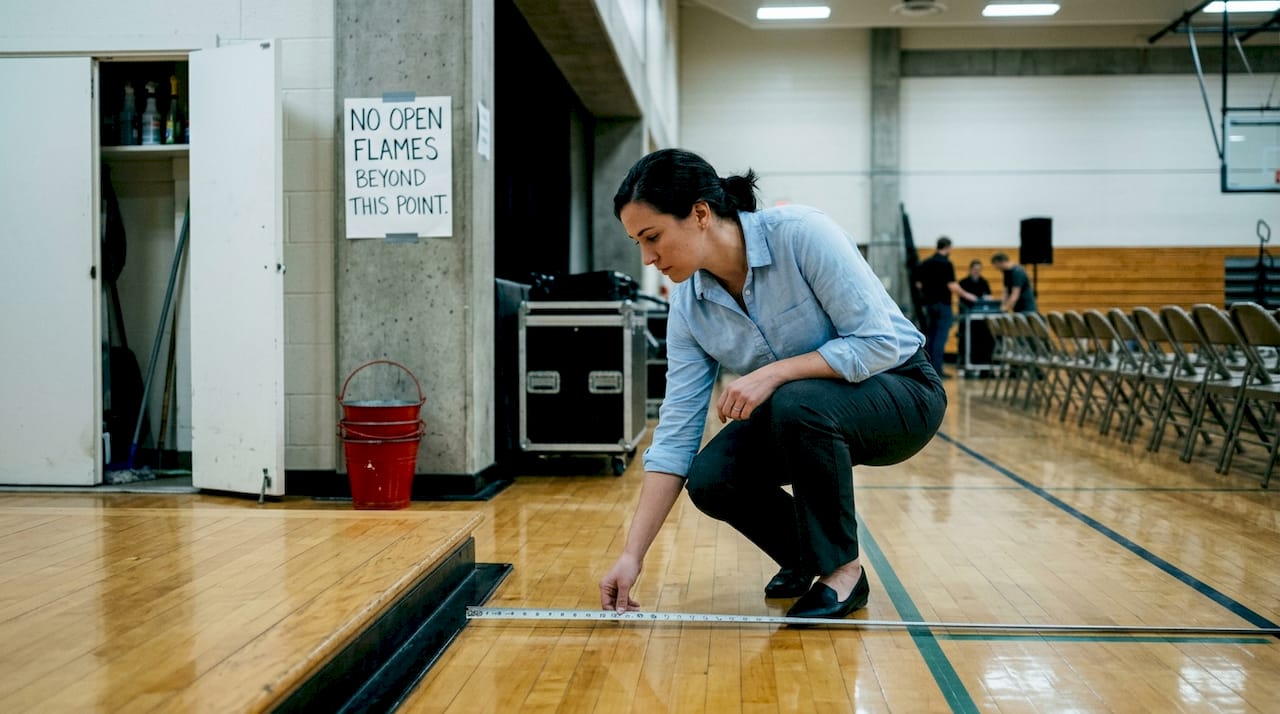
Measure the fallout zone. Use a tape measure to confirm at least 15 feet of clear space from the performance area to the nearest audience position.
Test ventilation. Open windows and doors, then observe airflow. For indoor venues, confirm that HVAC systems are functional and will not recirculate smoke into audience areas.
Confirm entry and exit routes. Walk every emergency exit yourself. Check that paths are unobstructed and clearly marked.
Check ceiling height. Measure from the floor to the lowest fixed structure, such as beams, sprinkler heads, or light rigs.
Identify fueling zones. Confirm there is a designated, fire-safe area away from the audience for fueling props and handling accelerants.
Pro Tip: Many venues overlook ceiling height entirely. A performer using a fire staff or poi needs significant vertical clearance. Always verify that maximum flame height will not come within 10 feet of any ceiling structure, sprinkler head, or decorative element. Getting fire marshal approval tips from experienced performers before your walk-through can help you catch these issues early.
Check materials and equipment: What must pass inspection
With layout and distancing established, focus next on the physical materials and props involved. Everything that could potentially contact or be near flames must be evaluated.
Common materials and decor items that require flame-retardant certification include:
Stage curtains, drapes, and backdrops
Table linens and fabric decorations
Performer costumes and accessories
Tent walls or canopy fabric at outdoor events
Any paper, foam, or fabric used as event signage
Use this comparison table to quickly assess what passes and what fails a standard NFPA 701 inspection:
Item | Passes inspection | Fails inspection |
Treated polyester drapes | Yes | Untreated polyester drapes |
Certified fire-retardant costumes | Yes | Synthetic fabric without treatment |
Approved backdrop material | Yes | Standard paper or cardboard backdrops |
Flame-treated table linens | Yes | Off-the-shelf fabric linens |
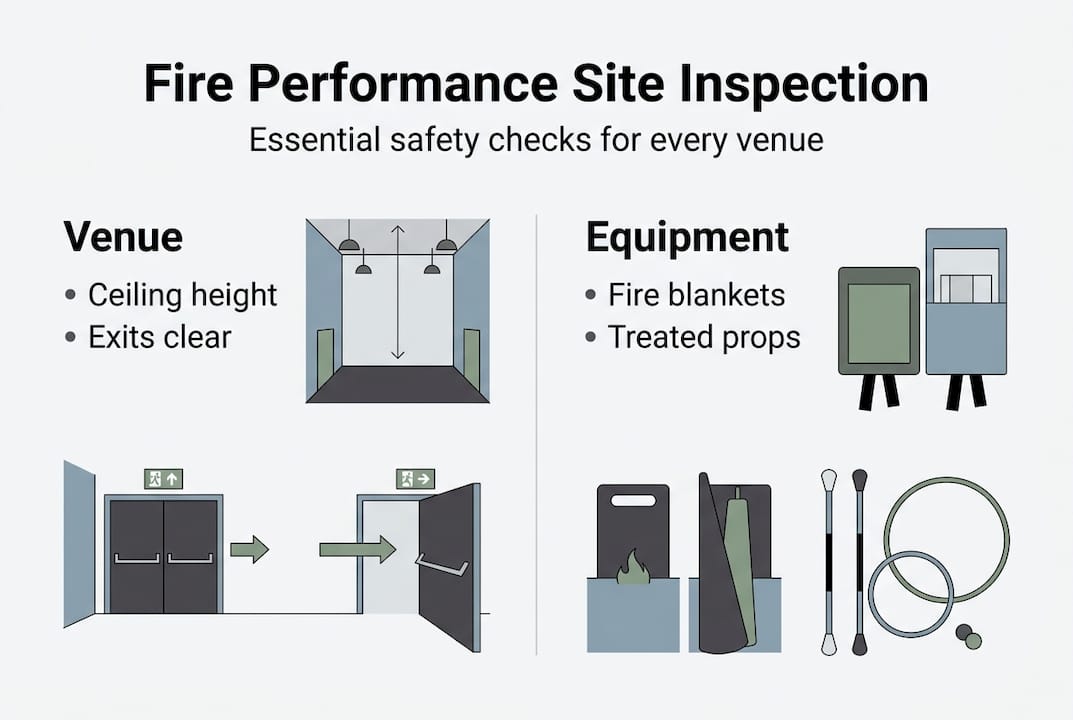
All materials must meet NFPA 701 standards, and you should have certification documentation available during inspection.
Beyond materials, you must have specific safety equipment staged and ready at the venue before the show begins:
At least two fire extinguishers accessible within the performance area
Sand buckets as a backup suppression method near the fueling zone
Clear signage marking the performance perimeter and emergency exits
Proper, sealed fueling containers with no leaks or damage
A dedicated fire safety officer on-site during the entire event
For a closer look at what props and equipment meet professional standards, explore our approved fire dancing props guide.
Pro Tip: Always keep an extra fire blanket accessible backstage or just off the performance area. If a performer’s costume catches a spark, a fire blanket allows for quick, controlled suppression without the mess of an extinguisher or the danger of using water near fuel-soaked materials.
Rehearsal and final check: Run-throughs, spotters, documentation
Once your site, materials, and crew are almost ready, it is time for the crucial run-throughs and last documentation checks. Skipping this phase is where well-prepared events can still go wrong.
Here is a numbered checklist for your pre-show rehearsal process:
Assign all roles in writing. Every spotter, safety officer, and stage crew member should have a written role sheet before rehearsal begins.
Brief your spotters specifically. Spotters need to know their exact position, what to watch for, and when to act. A general safety briefing is not enough.
Test all emergency gear. Physically operate each fire extinguisher check valve, confirm sand buckets are full, and walk exit routes with the full crew present.
Run a mock performance. Do a full non-fire, run-through with performers in position and audience stand-ins placed at actual event positions. Watch for sight line issues and crowd movement patterns.
Check documentation one final time. Confirm all paperwork is in a single, accessible folder for fire marshal review.
Your documentation folder must contain:
Signed permits from the AHJ
Proof of liability insurance
NFPA 701 flame-retardant certificates for all materials
Performer qualifications and fire safety certifications
A written emergency response plan
Remember: If in doubt, document everything. Inspectors can stop a show for missing paperwork even when the physical setup is perfect. A missing signature or expired certificate is enough to pull the plug on an otherwise compliant event.
Experts recommend professional consultants for complex venues and mock inspections to address nuances like crowd density or historic buildings. For more on building solid safety rehearsal habits, visit our fire safety rehearsals resource page, or reach out for professional fire safety consulting if your venue presents unique challenges.
What most site inspections miss—and why nuance matters
After you have followed all the standard steps, it is worth asking: what else might slip through the cracks? In our experience working with event planners across many types of venues, the most common failures are not about skipping obvious rules. They come from assuming a standard checklist fits every situation.
Historic buildings present airflow patterns that standard ventilation checks miss entirely. Large crowds shift and move in ways that can shrink a compliant buffer zone to nothing within minutes of show time. Untrained spotters who know the theory but have never seen live fire can freeze when something unexpected happens.
The nuanced, venue-specific review is what separates a truly safe show from one that just passed paperwork. Walk the space at the time of day the event will run. Notice where shadows fall, how guests tend to cluster, and whether the fueling zone remains accessible when the space fills up.
Our expert fire safety consulting team has seen the same oversights repeat themselves across hundreds of events. The fix is always the same: treat every venue as unique and review it with both a performer’s eye and an inspector’s eye.
Pro Tip: Always walk through the space twice, once as the performer thinking about movement and clearance, and once as the inspector thinking about crowd safety and compliance. You will catch entirely different issues each time.
Take your fire event safely to the finish line
Ensuring safety does not stop at inspection. Connecting with professionals who understand both the artistry and the compliance side of fire performance is what separates a good event from a great, worry-free one.
We offer fire performance consultation services designed specifically to help planners like you navigate permits, inspections, and venue requirements with confidence. Whether you want to strengthen your team’s knowledge through fire dance training or want to watch professionals in action before you book, you can see a fire dancing showcase to experience what a fully compliant, thrilling performance looks like. Let us help you make your event spectacular and safe.
Frequently asked questions
What documents are required before a fire performance site inspection?
You must have permits from the Authority Having Jurisdiction, proof of flame-retardant materials certified to NFPA 701, and current liability insurance ready for review before inspection begins.
Is it safer to do fire performances indoors or outdoors?
Outdoor fire performances are generally safer and preferred because natural ventilation reduces smoke buildup and most regulatory requirements are less restrictive outside.
How much space should there be between the audience and fire performers?
You must maintain at least 15 feet of separation, or twice the fallout radius, between performers and the audience per NFPA 1126 requirements.
What are the main differences between pyrotechnic and fuel-based fire shows for inspections?
Pyrotechnic shows require indoor sprinklers and stricter clearances under NFPA 1126, while fuel-based shows center on proper spotter placement and safe fueling procedures.
Recommended
Comments