

How to Plam a Fire Performance for a Private Party: 5 steps


TL;DR:
Proper planning, permits, and safety coordination are essential for memorable fire performances.
Vetting and collaborating with experienced professionals ensures safety and a flawless event execution.
Using LED alternatives or family-friendly props can create engaging entertainment safely indoors or with children.
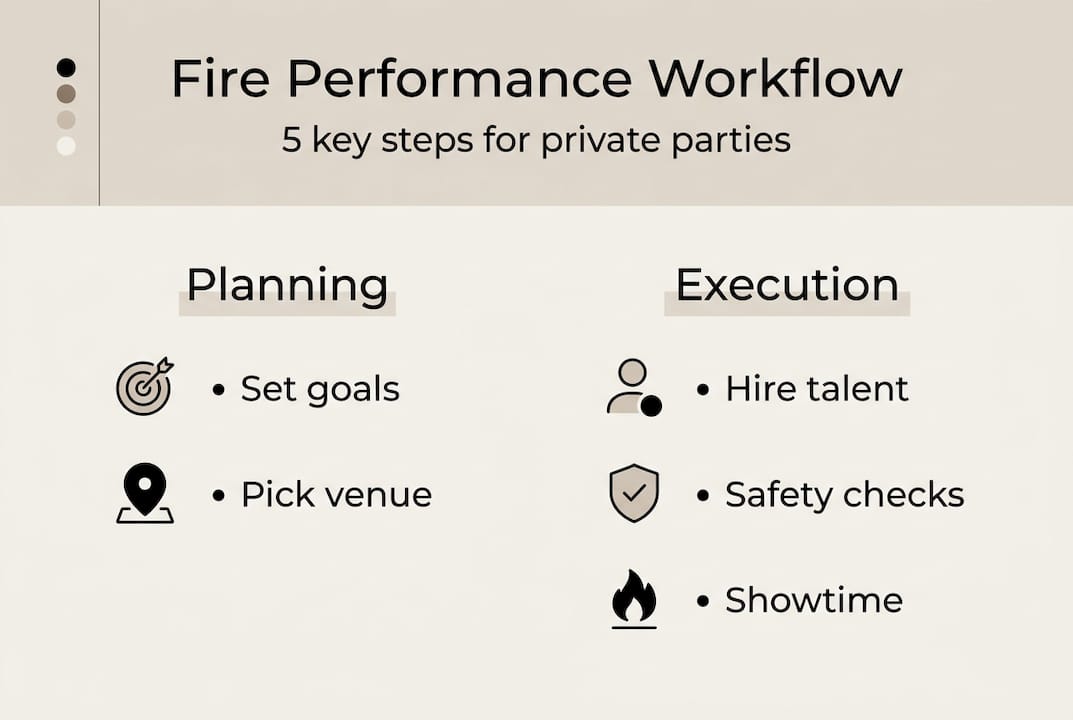
Your guests want something they’ll talk about for months. Fire performance delivers exactly that, but only when the planning behind it is just as impressive as the flames themselves. Permit delays, venue conflicts, and last-minute safety surprises can turn a spectacular act into a stressful memory. This guide walks you through a clear, step-by-step private party entertainment workflow, from setting your event goals to executing a flawless fire show. Whether you’re planning an intimate backyard gathering or a large-scale celebration, these steps will help you integrate fire entertainment with confidence.
Table of Contents
Key Takeaways
Point | Details |
Complexity of party impacts the performance | The larger, longer and more entertainment you book, the more complex it is to execute |
Structured planning is essential | Organizing fire performances requires a defined workflow to ensure compliance, safety, and guest satisfaction. |
Safety trumps entertainment | Prioritize permits, insurance, and buffer zones to keep events exciting and accident-free. |
Family-friendly alternatives work | LED props and non-flammable options deliver visual thrills without fire hazards, ideal for indoor or child-focused parties. |
Vet performers thoroughly | Always check references, insurance, and compliance history before booking fire artists. |
Communication is key | Coordination with venues, fire marshals, and performance teams ensures flawless execution. |
Define your event goals and entertainment needs
Every great fire performance starts with a clear picture of what you want your guests to feel. Are you going for jaw-dropping wow factor? A family-friendly atmosphere? Elegant and theatrical? Energetic and interactive? Sexy and provocative? Your answer shapes every decision that follows.
Start by identifying your audience profile. A corporate cocktail party might call for a polished, choreographed solo act. A birthday celebration with kids in the mix might lean toward a lighter, more circusy aesthetic with performers ready to engage children. A large outdoor wedding reception can support a full group show with multiple performers and longer stage time.
Venue limitations matter just as much as guest preferences. Most private home locations do not need permitting, but if you are organizing an event at a special venue, you will need to consult the property owner. Indoor venues require special permits and additional coordination with fire marshals. Fire entertainment in desert climates like Palm Springs and similar warm-weather markets often have well-established outdoor venues that work beautifully for fire acts, while Riverside fire dancers frequently navigate a mix of indoor and outdoor settings.
As part of a structured planning process, defining event needs including audience, theme, scale, and timing is the essential first step before any booking conversation begins.
Here’s a quick reference table to help you map your event variables:
Event variable | Questions to ask |
Audience | Age range, size, familiarity with fire arts |
Theme | Elegant, festive, family-friendly, cultural |
Budget | Solo act vs. group show; travel costs |
Scale | Number of guests; venue capacity |
Timing | Duration of performance; placement in program |
Once you’ve answered these questions, you’ll have a clear brief to bring to any fire entertainment provider. This saves time, avoids miscommunication, and ensures the act you book actually fits your event.
Solo and duo acts work well for 50 or fewer guests in intimate settings
Group shows scale to larger parties and create higher visual impact
Performance length typically ranges from 5 to 30 minutes depending on your program
Theme alignment (fire spinning vs. fire breathing vs. LED alternatives) affects both mood and safety planning
Spotlight Performances or Ambient Performances?
Fire performances come most often in two types of offerings: spotlight performances and ambient performances.
Spotlight performances are a continous, single show - often 15 to 20 minutes. These types of shows are for events that want their guests to take a moment to watch a show - where the performance is the focus of the event for this short time. This may be after a big speech at an event or after the birthday cake is cut or dinner has been served and everyone is eating.
Ambient performances are a more flexibible performance offering. Instead of one show, performers provide a series of sets spaced throughout the evening. For events where even coordinators would prefer to sprinkle entertainment throughout the night without making the entertainment the primary focal point, this is a great option to add "ambiance."
Source and vet your fire performance entertainers
Once your event’s objectives are set, the next step is finding entertainment you can trust. This is where many planners rush, and it’s where things most often go sideways.
You have two main paths: booking through an agency or hiring a performer directly. Both have real advantages, and the right choice depends on your event’s complexity.
Factor | Agency booking | Direct hiring |
Vetting | Pre-screened performers | You verify credentials |
Variety | Multiple acts available | Limited to one artist |
Cost | Higher, includes agency fee | Often lower |
Accountability | Agency handles issues | You manage directly |
Flexibility | Less negotiable | More customizable |
Regardless of which path you choose, vetting professional performers through portfolios and references is non-negotiable. Ask to see video of past performances, request client references from similar events, and confirm that the performer has experience with private parties specifically.
Here’s a step-by-step approach to sourcing and vetting:
Search for performers with experience in your region
Review their portfolio for variety, professionalism, and safety protocols
Ask for two to three client references from comparable events
Confirm liability insurance coverage and policy limits
Ask whether they’ve worked with fire marshals in your venue’s jurisdiction before
Review their contract for cancellation terms, setup requirements, and safety responsibilities
(Or contact Radiate Fire Dancing and we will take care of this for you ;) )
Logistics, permits, and safety planning: Crucial details
Vet your entertainment, and now focus on making the event safe and hassle-free. This section is where many planners underestimate the time and coordination required.
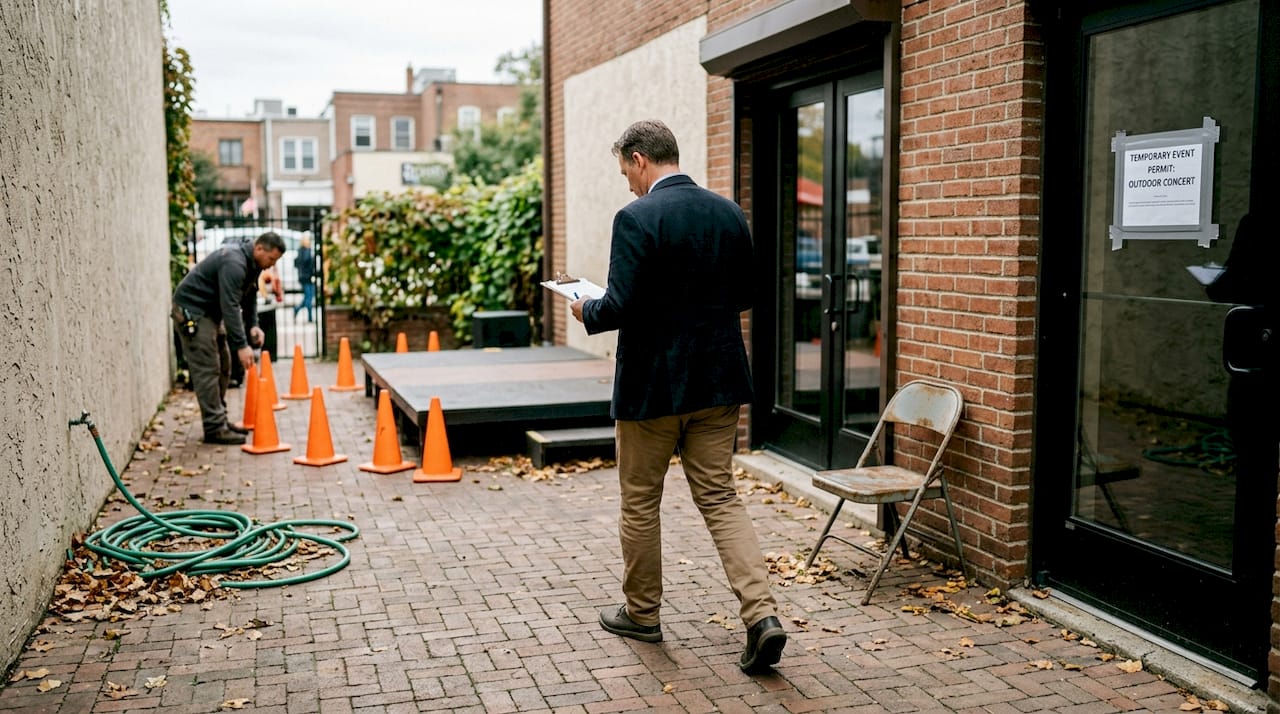
Securing permits, insurance, and venue approvals at least 4 to 6 weeks in advance is the standard timeline for fire performance events. Waiting until two weeks out is a gamble that rarely pays off.
Your venue’s fire marshal is a key partner, not an obstacle. Schedule a pre-event walkthrough with them early. Discuss fuel storage, audience buffer zones, wind conditions, and emergency exit access. Most venues that have hosted fire acts before will have a checklist ready. If they haven’t, that’s a signal to proceed carefully.
Don’t skip a pre-event site inspection. Ninety percent of issues are caught here, from overhead obstructions to surface materials that can’t handle fuel spills.
Safety methodologies for fire performance prioritize trained spotters, audience buffers, proper fuel storage, fire-resistant clothing for performers, and direct coordination with your venue’s fire marshal. These aren’t optional extras. They’re the foundation of a safe show.
Here are the most common edge cases to plan for:
Wind: Even moderate wind can redirect flames unpredictably. Have a wind threshold agreed upon with your performer in advance
Indoor environments: These require additional permits, ventilation checks, and often a fire suppression system on standby
Children present: Audience buffer zones should be larger, and LED prop alternatives should be discussed as a backup plan
Fuel handling: Fuel must be stored away from the performance area and managed by the performer’s team only
You can explore fire dancing safety basics to get familiar with the principles before your planning conversations, and consult fire safety requirements specific to your event type and venue.
Execution: Delivering a successful fire performance
With logistics addressed, you’re ready to deliver an unforgettable fire show. Execution is where all your planning pays off, but only if you follow through on the details.
Here’s a step-by-step execution sequence:
Rehearsal walkthrough: Confirm performer arrival time, setup area, and run a dry walkthrough without fire
Safety briefing: Gather your performer’s team, venue staff, and spotters for a shared safety review
Audience positioning: Set up buffer zones and brief event staff on crowd management during the performance
Fuel prep: Allow the performer’s team to handle all fuel preparation in a designated area away from guests
Performance: Execute the show as planned, with spotters active and fire extinguishers accessible
Post-show cleanup: Confirm all fuel is stored or disposed of safely; inspect the performance area
Feedback collection: Gather guest and venue feedback immediately after the event
Performances scale from solo acts for around 50 guests to group shows for large parties, with durations ranging from 5 to 30 minutes and costs between $450 and $6,500 depending on scale, travel, and performer count.
For post-event wrap-up, keep it simple:
Send a thank-you note to your performer and venue contact
Share feedback with the performer’s team so they can improve future shows
Document what worked and what you’d change for your next event
Leave an honest review to help other planners make informed decisions
On-site execution with a dedicated safety team and a structured post-event cleanup process is what separates a professional fire show from a risky one.
Our hard-won lessons about integrating fire performance at private events
Here’s something most planning guides won’t tell you: the workflow itself isn’t where events fail. It’s the assumptions people make inside the workflow.
Planners often assume that because a performer is talented, the logistics will sort themselves out. They won’t. We’ve seen beautifully skilled artists show up to venues that never approved open flame, or perform at events where no one briefed the venue staff on safety protocols. The result is a performance that gets cut short or shut down entirely.
The other common mistake is overcomplicating the entertainment. A single, well-executed fire act with clear audience sightlines and good timing creates more impact than three acts crammed into a program. Simplicity, when the act itself is spectacular, is always the right call.
Our strongest advice: treat your venue staff and fire marshal as collaborators from day one. They want the event to succeed. When you bring them into the planning early and communicate clearly, they become your biggest allies. You can always start with an expert fire performance consultation to get a clear picture of what’s realistic for your specific event before committing to anything.
Connect with expert fire performers for your next event
You now have a solid framework for planning fire entertainment that’s both memorable and safe. The next step is putting that knowledge to work with the right team behind you.
Our fire performance consultation is designed specifically for event coordinators who want expert guidance before they commit to a booking. We’ll help you match the right act to your event’s goals, venue, and guest profile. Want to learn more about what makes fire performance so compelling? Explore our learn about fire dancing resource hub, or browse the full range of fire dancing props we use in our shows. Let’s make your next event one your guests won’t stop talking about.
Frequently asked questions
How far in advance should I book fire performers for my event?
Book fire performers at least 4 to 6 weeks ahead to allow enough time to secure permits, finalize insurance for larger, events, and get venue approvals in place without rushing. Events at private residences can be booked a few days in advance.
What safety measures are necessary for fire performances at private parties?
You’ll need trained spotters, audience buffers, proper fuel storage, fire-resistant costumes for performers, and direct coordination with your venue’s fire marshal before the event begins.
How can fire entertainment be adapted for family-friendly or indoor events?
LED props and non-flammable performance tools deliver strong visual impact while keeping the environment safe for children and enclosed spaces, and family-friendly adaptations can be just as engaging as live fire.
What does a typical fire performance cost for private parties?
Costs range from $450 to $6,500 depending on the number of performers, show duration, travel requirements, and whether you’re booking a solo act or a full group performance.
Who is responsible for on-site safety during fire entertainment?
Both the performer’s team and venue staff share responsibility, with trained fire spotters managing the performance area and clear communication protocols established between all parties before the show starts.
Recommended
Comments